
#37 What we built this summer: two diagnostic machines
The summer was spent finalizing two tools that we had previously been using manually: the Attractiveness Model Canvas for territories and the Strategic Diagnostic 360 for organizations. The principle is the same in both cases: cross-referencing what people say with what the data shows.
A standard territorial assessment costs tens of thousands of euros, takes six months, and comes after the decision has already been made. A thorough business assessment presents the same problem, but on a different scale. We spent the summer working to reduce these two timeframes to something manageable. Here's where we stand.

The Attractiveness Model Canvas: one territory, three canvases, two layers
The principle can be summed up in one sentence: you cannot understand a territory by looking at only one source.
Each dimension analyzed by the Canvas combines two layers. Perception, extracted in real time from Google reviews, along with actual comments from visitors and residents. And objective data, drawn from INSEE, data.gouv.fr , SNCF, ARCEP, CEREMA, DATAtourisme, and several others. The first layer describes what people feel. The second explains why.
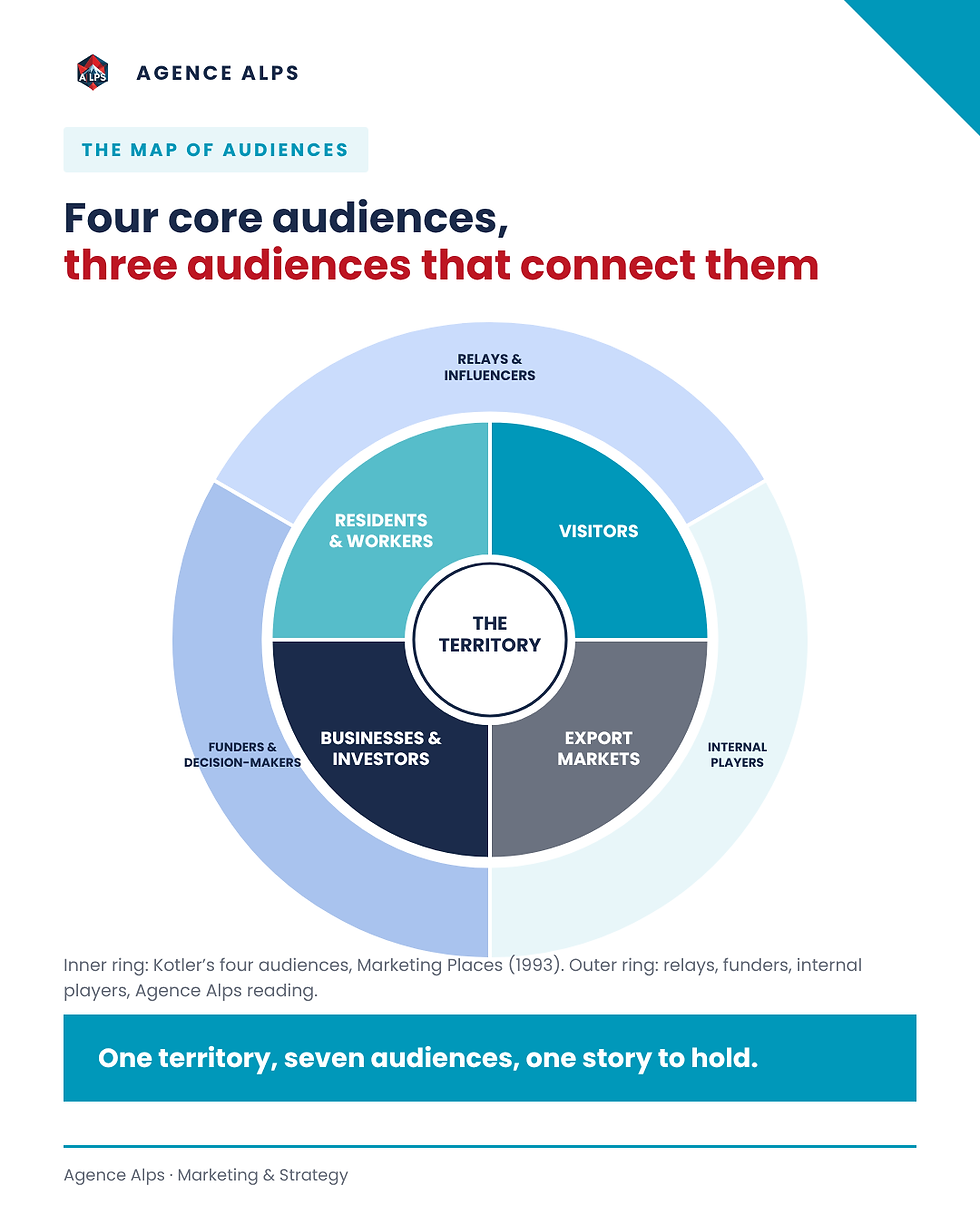
The report is structured around three canvases: Attractiveness, with eleven perceived dimensions, ranging from picturesqueness and hospitality to monetary value; Destination, with sixteen dimensions of structural offerings; and Territory and Society, with seven dimensions of governance, housing, mobility, and cohesion.
In Chamonix, the overall score is 82 out of 100, with a picturesque rating of 92 and a monetary value of 38. Both figures describe the same destination. That's the whole point.
Around the canvases, the strategic modules include: comparative radars, territorial brand pyramid, SWOT 2.0 with cross-strategy, effort matrix, 3F grid (Attract, Inspire, Prefer), and a temporal tracking system that allows the measurement to be replayed month after month.
The Strategic Diagnostic 360: eighteen frameworks from a name
For organizations, registration is even simpler. You enter a name, a SIREN number, or an establishment. The application then retrieves available public data: data.gouv.fr , BODACC for insolvency proceedings, INPI for capital and beneficial owners, INSEE for the NAF code and workforce size, and Google for reviews and online presence. You can also add a business plan, annual accounts, and articles of association, which further enhance all the frameworks.
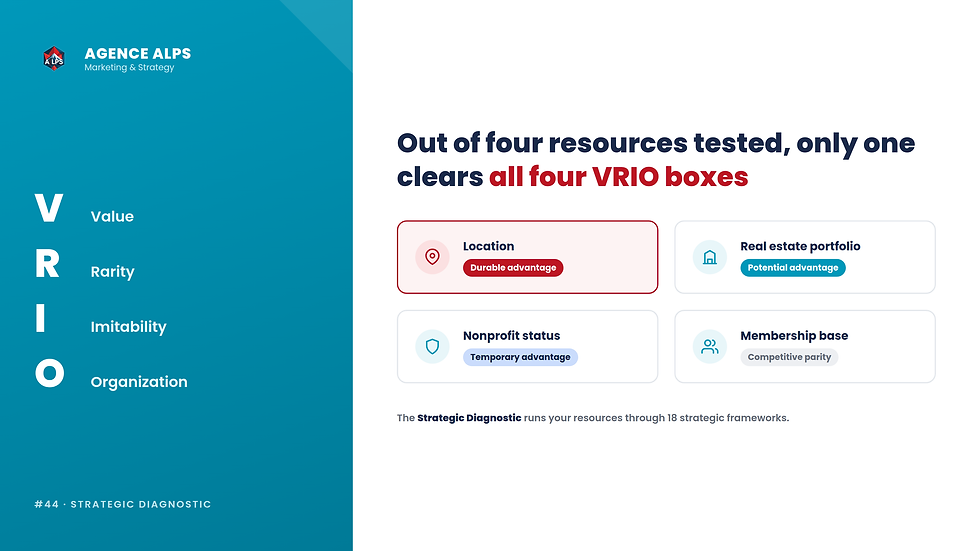
Next, eighteen strategic frameworks are implemented, divided into six tabs. Analysis, using Porter, PESTEL, McKinsey 7S, stakeholders, value chain, and VRIO. Finance, with financial health coded as solid, vigilant, or alert, a five-year business plan, and a financing guide. Models, with the Business Model Canvas and the VPC, which measures the gap between what you promise and what your customers actually experience. Digital presence, rated out of ten across six dimensions, including GEO citableness. Marketing, with personas extracted from reviews, competitors, Jobs To Be Done, the Ansoff Matrix, and SWOT 2.0. And finally, a synthesis that produces an actionable thesis in one sentence.
Each frame displays a confidence score out of five. When data is missing, the tool states this instead of providing an explanation.
What really changes
The common point between the two tools is not speed, even though a complete diagnosis can now be delivered in an hour. It is the honesty of the material.
A perception score alone is a survey. A single INSEE data point is a table. Combining the two creates a usable tension: Chamonix perceived as too expensive, with a median price of €8,420 per square meter and 76% of residences being second homes, is no longer a tourist's opinion, it's a matter of public policy. A Réunion-based association whose turnover has increased 2.7 times while its occupancy rate has fallen from 39.8% to 32.7% is no longer good news, it's a warning sign.
And now ?
Both tools are up and running. The Canvas is ready for local authorities, regional tourism boards, and tourist offices that want an objective basis for discussion before launching an attractiveness plan. The Strategic Diagnostic 360 is designed for SMEs and associations that need a comprehensive assessment in a few days, not a quarter. The Strategic Marketing tool will be available in September.


Comments