
#28 A territory is not just a tourist destination. It is an ecosystem.
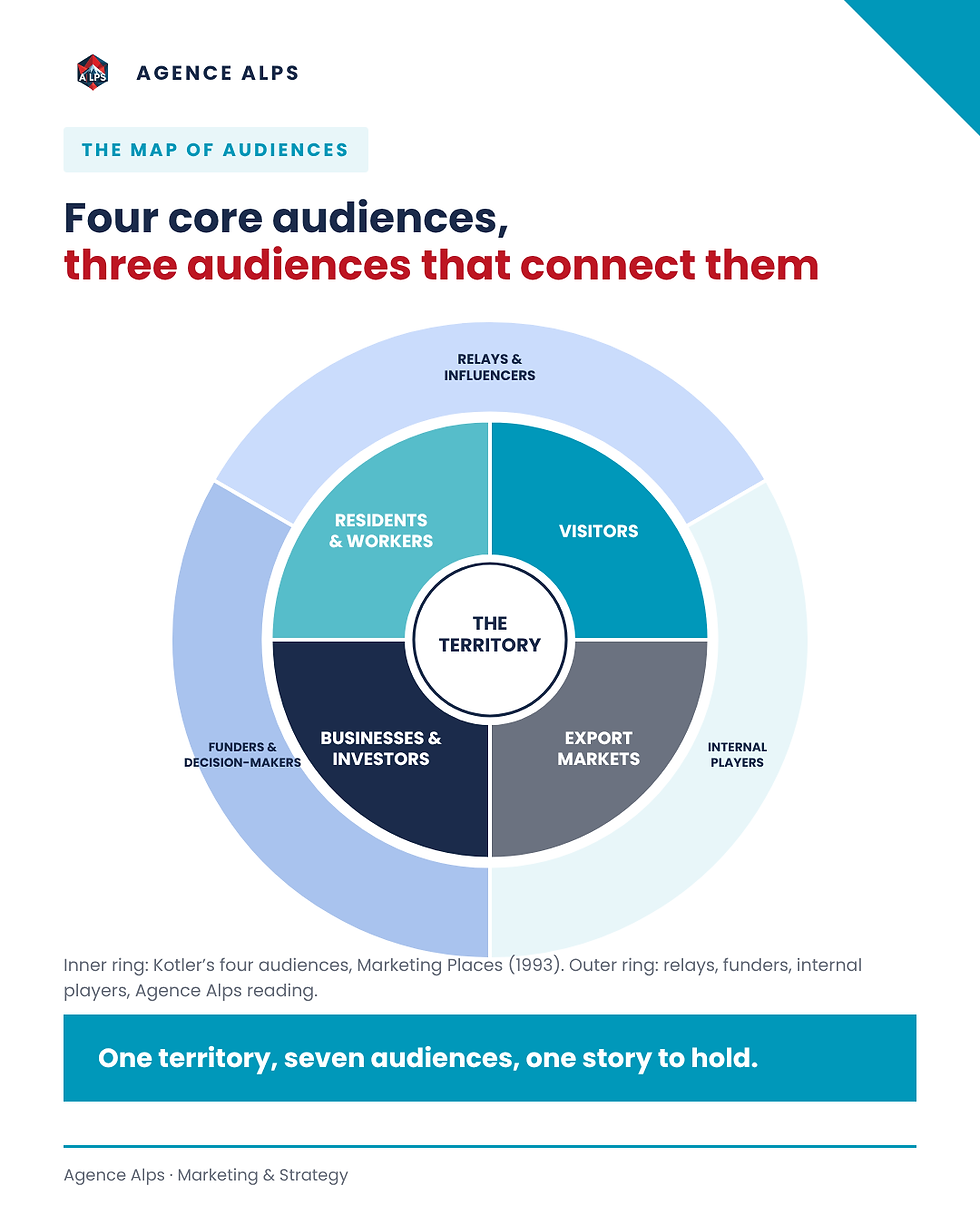
A territory is not simply a postcard image or a place for visitors to pass through. It is a living, complex ecosystem where the expectations of tourists and the needs of residents intersect. Understanding this dual dynamic is essential for building an effective and sustainable territorial policy.
To illustrate this idea, let's take the example of Chamonix, an iconic destination in the French Alps. Its territorial analysis reveals impressive strengths, but also major challenges. This combined perspective of visitors and residents sheds light on the reality of a territory that must constantly adapt.

The visitor's perspective: what the tourist is looking for
Visitors come to Chamonix for many reasons. The resort's global renown is undeniable, with a score of 83/100 in global tourism. This reputation attracts tourists from all over the world, eager to discover the peaks, mountain sports, and the unique atmosphere of the Alps.
The landscapes play a central role in this attraction. With a score of 92/100, Chamonix offers an exceptional natural setting. Mont Blanc, glaciers, forests, and hiking trails create a scenery that fascinates and inspires.
But visitors aren't just looking for beauty. They also want easy access to the destination, suitable services, and a seamless experience. This is where the problem lies: accessibility scores only 55/100. Every summer, the main road leading to Chamonix is congested, causing traffic jams and frustration.
This difficulty in access can hinder tourism development and tarnish the destination's image. However, it also highlights the importance of intelligent flow management and a diversified mobility offering.
The resident's perspective: why stay and live here
Residents, on the other hand, live in this area every day. Their perspective is often different from that of visitors. They seek quality of life, social cohesion, access to services, and a balance between economic development and environmental preservation.
On this point, the Chamonix assessment reveals a blind spot: social issues and inclusion are not yet being measured. This lack of information hinders a comprehensive territorial policy. How can we act without knowing the real needs of the residents, their difficulties, and their expectations?
Residents also suffer the consequences of mass tourism: rising prices, pressure on housing, traffic congestion, and sometimes a feeling of exclusion. Yet, they are also key players in the area's attractiveness. Their commitment, their knowledge of the place, and their ability to welcome others are invaluable assets.

The Territory & Destination Canvas: a tool for combining these perspectives
The Territory & Destination Canvas is a tool that allows us to bridge these two often opposing perspectives. It helps transform a simple tourism assessment into a genuine lever for territorial policy.
By combining the expectations of visitors and the needs of residents, it offers a comprehensive and balanced view. This dual perspective allows for better targeting of actions, anticipation of tensions, and the building of harmonious development.
For example, to improve accessibility, it is not enough to simply improve traffic flow on the national highway. We must also consider alternatives: public transportation, active mobility options, and park-and-ride facilities. These solutions must be designed for tourists, but also for residents.
Similarly, measuring social impact and inclusion is essential. This involves surveys, consultations, and close collaboration with local stakeholders. The goal is to create a territory where everyone feels included, where tourism benefits everyone.
Concrete examples of territorial support
To support this approach, specialized services can play a key role. For example, the Alps Agency offers support in marketing strategy and territorial attractiveness, with particular expertise in tourism.
Their approach integrates the use of artificial intelligence to analyze geographic and SEO data, in order to optimize the visibility and management of territories. This type of tool makes it possible to better understand tourist flows, visitor behavior, and the expectations of residents.
Another useful service is the Connected Territories platform, which facilitates the collection and analysis of local social and economic data. It helps local authorities to better understand their population and adapt their policies.
Finally, innovative mobility solutions, such as those offered by Mobilité Montagne, provide concrete alternatives to reduce traffic congestion and improve access to tourist sites.
These examples show that transforming a diagnosis into a territorial policy requires appropriate tools, a shared vision, and collaboration among all stakeholders.

Why this double reading is essential
Without this dual perspective, we risk prioritizing only one aspect: either tourism or local life. This creates imbalances, frustrations, and sometimes conflicts.
By integrating both viewpoints, we build a more resilient territory. Tourism becomes an engine of development that benefits everyone. Residents stay and thrive. The territory gains sustainable appeal.
This approach is also a lever for innovation. It encourages us to rethink infrastructure, services, and governance models. It paves the way for more inclusive and environmentally responsible solutions.
Conclusion: to think of the territory as a living ecosystem
A territory is much more than a tourist destination. It is an ecosystem where visitors and residents coexist, interact, and shape the future together.
The case of Chamonix illustrates this reality. Its global renown and exceptional landscapes attract millions of visitors. But its challenges in terms of accessibility and social cohesion show that we must go further.
The Territory & Destination Canvas offers a method for combining these perspectives and transforming an assessment into a territorial policy tool. By leveraging specialized services and innovative technologies, it is possible to build a balanced, attractive, and sustainable territory.
For businesses and economic stakeholders linked to tourism, this vision is an invitation to engage in a collective approach. Together, we can make every territory a place where it is good to live and visit.


Comments